A healthy lawn should feel thick, green, and vibrant underfoot, but many homeowners across the UK struggle with one frustrating issue: moss. If left untreated, moss can quickly spread through weak or damp turf, leaving your lawn patchy, uneven, and unhealthy. Fortunately, with the right approach, moss can be removed and prevented from returning.
Understanding how to get rid of lawn moss is not just about treating what you see on the surface. To achieve long-term results, you must identify why moss is growing in the first place and improve the overall health of your lawn. Moss often thrives where grass struggles, meaning it is usually a sign of an underlying issue rather than the root problem itself.
In this complete guide, we explain why moss develops, how to remove it properly, and the best ways to stop it from coming back, helping you restore a thick, healthy lawn all year round.
What Causes Lawn Moss?
Before treating moss, it is important to understand why it appears. Moss tends to grow where grass is weak or unable to thrive. Common causes include poor drainage, shade, compacted soil, and weak turf. Moss is more likely to take hold in lawns with sparse grass growth.
Poor Drainage
One of the most common reasons for moss growth is waterlogged soil. Moss thrives in damp, wet environments where water sits on the surface for extended periods. If your lawn often feels soggy after rainfall, drainage may be the issue.
Compacted Soil
Heavy foot traffic, children playing, pets, and repeated mowing can compact the soil over time. Compacted soil restricts airflow, reduces drainage, and prevents grass roots from growing properly, creating ideal conditions for moss.
Too Much Shade
Grass needs sunlight to thrive. Lawns located beneath trees, fences, hedges, or buildings may struggle due to reduced light, allowing moss to dominate.
Poor Lawn Maintenance
Incorrect mowing, over-cutting, lack of feeding, and infrequent maintenance weaken the lawn and reduce turf density, leaving gaps for moss to establish.
Why Lawn Moss Is a Problem
Although moss may appear harmless at first, allowing it to remain can lead to several problems:
- It competes with grass for space
- Creates an uneven and spongy lawn surface
- Encourages water retention
- Makes lawns slippery when wet
- Causes patchiness and thinning
If ignored, moss can slowly overtake healthy grass and turn your lawn into a soft, uneven carpet rather than a usable garden surface.
How to Remove Lawn Moss Properly
The most effective way to remove moss is through a combination of physical removal and lawn repair.
Step 1 – Scarify the Lawn
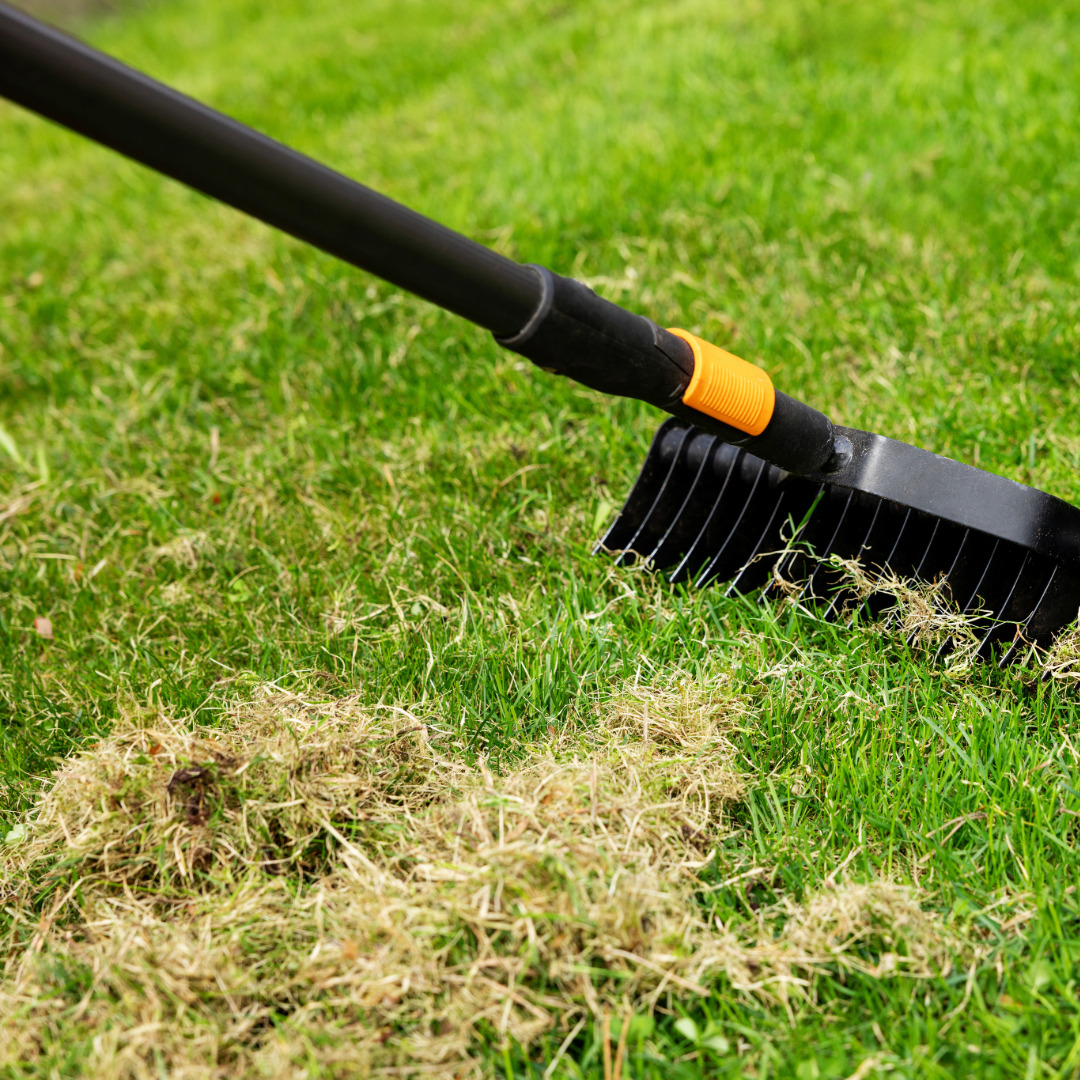
Scarifying is the process of aggressively raking or mechanically combing through the lawn to remove moss, dead grass, and thatch. It is one of the most effective methods for moss removal.
You can scarify using:
- A spring-tine rake
- A manual scarifier
- An electric scarifier machine
Scarify when the grass is actively growing so it can recover quickly, ideally in spring or early autumn. Scarifying is commonly recommended to remove moss when grass is growing strongly.
After scarifying, your lawn may look worse temporarily, but this is normal. The grass will recover stronger after treatment.
Step 2 – Remove Debris
Once scarified, thoroughly collect and dispose of all loose moss and debris. Leaving dead moss on the lawn can smother grass and prevent recovery.
Step 3 – Aerate the Lawn
Aeration helps improve drainage and reduces soil compaction. Using a garden fork or hollow tine aerator:
- Spike holes throughout the lawn
- Focus on compacted or damp areas
- Fill holes with sand if drainage is poor
This improves airflow and allows water to drain more effectively.
Step 4 – Overseed Bare Patches
After removing moss, bare patches will often appear. Overseeding helps grass reclaim these spaces before moss can return.
Apply fresh grass seed to thin or exposed areas and lightly rake into the soil. Keep moist until germination.
How to Prevent Lawn Moss from Returning
Removing moss alone will not solve the issue permanently unless you address the underlying causes.
Improve Drainage
If poor drainage caused the moss, improve water flow by:
- Aerating regularly
- Adding sand to clay-heavy soil
- Installing drainage channels if severe
- Levelling low spots where water collects
Increase Sunlight Exposure
Trim back:
- Overhanging trees
- Large shrubs
- Dense hedges
Allowing more light onto the lawn helps grass outcompete moss naturally.
Strengthen Your Grass
Healthy grass naturally suppresses moss. Improve lawn health by:
- Feeding during spring and autumn
- Watering during dry periods
- Overseeding thin patches
- Following proper mowing routines
Avoid Cutting Grass Too Short
Cutting grass too short weakens the turf and encourages moss growth. Most family lawns should be maintained between:
- 2.5cm and 4cm during normal growth
- Slightly longer during summer droughts
Best Time of Year to Treat Lawn Moss
Timing matters when dealing with moss. The best time to treat lawn moss is generally when grass is actively growing so it can recover after scarifying, typically in spring or early autumn.
Spring
Ideal for:
- Heavy scarification
- Overseeding
- Full lawn restoration
Early Autumn
Ideal for:
- Final moss removal before winter
- Repairing summer damage
- Preparing lawn for dormancy
Avoid treating moss during:
- Freezing winter periods
- Dry summer droughts
Common Mistakes When Treating Lawn Moss
Avoid these frequent mistakes:
Ignoring the Cause
Removing moss without fixing drainage or shade means it will return.
Over-Scarifying
Too much scarifying can damage healthy grass.
Not Overseeding Afterwards
Bare patches invite moss and weeds back quickly.
Treating at the Wrong Time
Scarifying in winter or drought can kill stressed grass.
Professional Lawn Moss Removal Services
Sometimes moss problems are too severe for DIY treatment. Large lawns, drainage problems, or years of neglect may require professional attention.
At Anastasia’s Eden LTD, we offer professional:
- Lawn scarifying
- Lawn aeration
- Moss removal
- Overseeding
- Full lawn restoration services
We help homeowners restore tired, moss-covered lawns into thick, green, healthy grass surfaces ready to enjoy all year round.
Final Thoughts on Lawn Moss Removal
Moss may be stubborn, but it is not unbeatable. The key to lasting lawn moss removal is understanding that moss is usually a symptom of weak grass, poor drainage, or inadequate maintenance.
By:
- Scarifying properly
- Improving drainage
- Aerating compacted soil
- Overseeding bare patches
- Maintaining healthy mowing and feeding routines
You can enjoy a stronger, greener, moss-free lawn for years to come.
If your lawn has become overrun with moss and needs professional restoration, Anastasia’s Eden LTD is here to help with expert lawn care and maintenance services across Bedfordshire, Hertfordshire, and Cambridgeshire.